

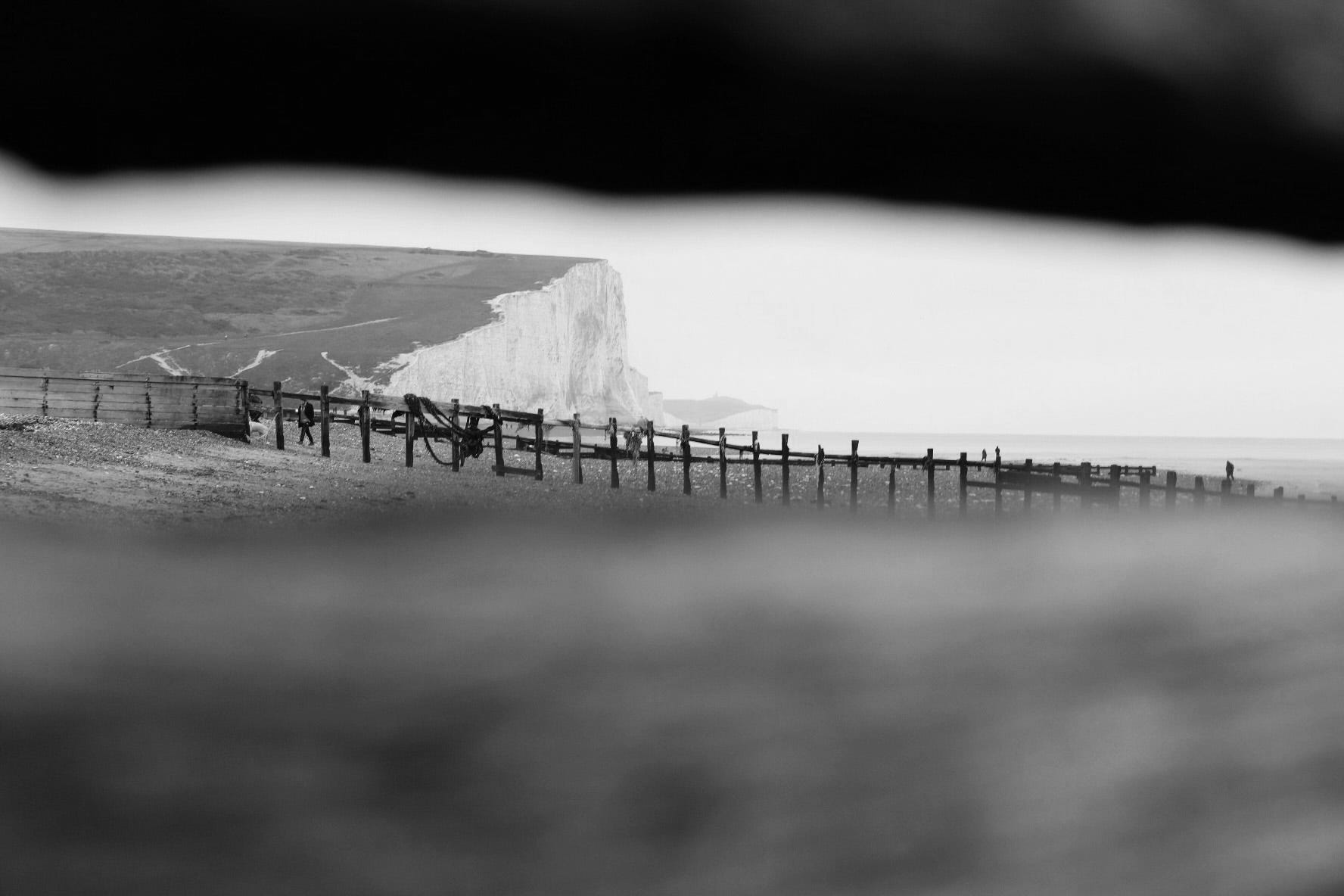
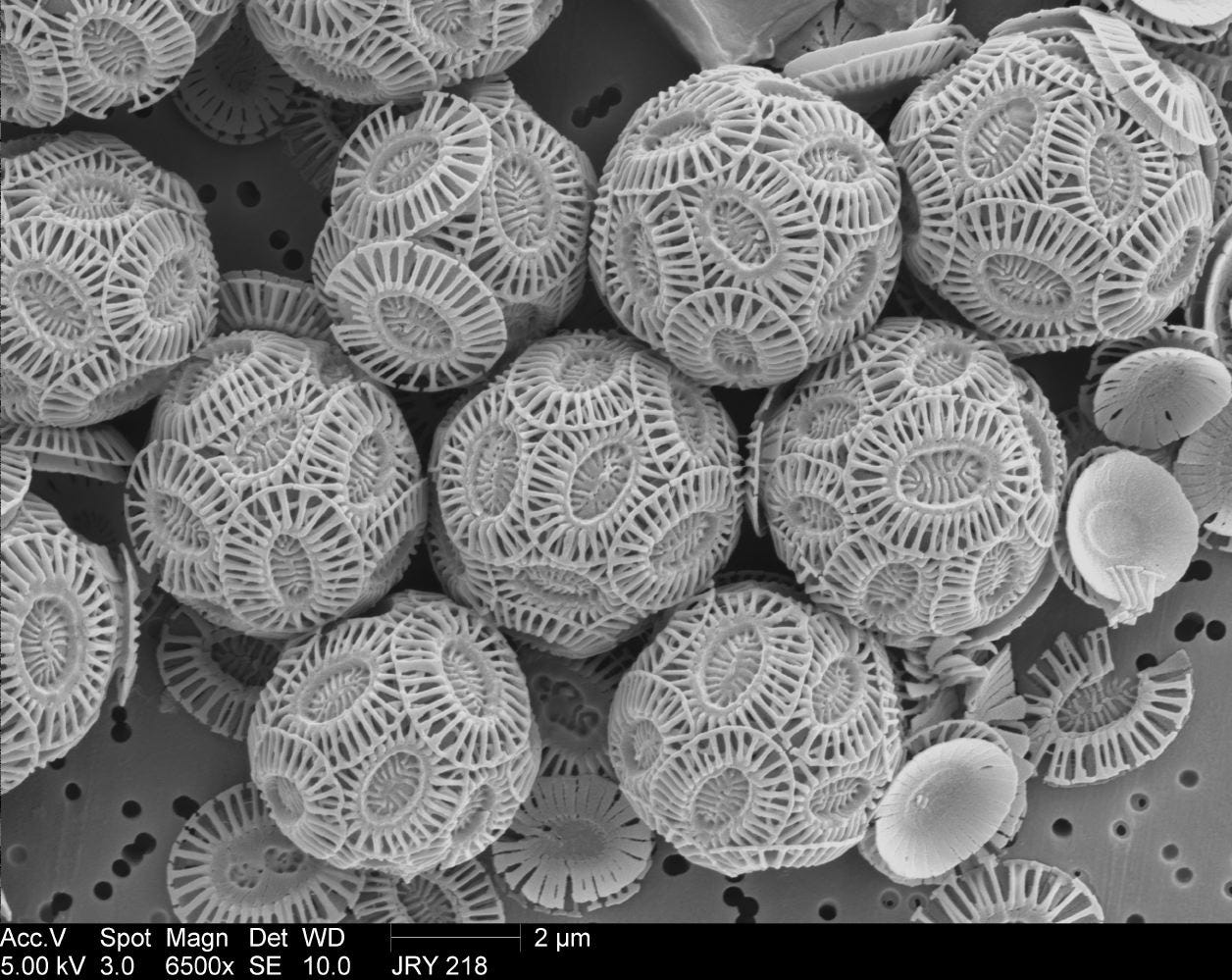
I can’t say I’m a fan of Geology as a subject. It’s just so old, and dry! Almost science fiction, set a gazillion years ago in an abstract world, unpopulated by humans or anything else we might recognise. Just heat, weather, forces and physics - snore! I am similarly unmoved by dinosaurs, which, as a child, would have fallen firmly into the same category in my head as Star Wars and Planet of the Apes – an excessively violent version of the world, enjoyed by boys. But something about the image of tropical seas lapping at our northern shores in the shade of cycad palms and ferns captures my imagination. Not only that, but apparently those seas where like warm milk! Water thick with trillions of tiny, white-shelled planktonic organisms, ‘coccolithophores’, dispersed in the prehistoric ocean. Under an electron microscope they look like lacework snowballs, formed by scores of intricately stitched exoskeleton rings. Gathered in perfect spheres, they rolled around together in the current, settled and aggregated on the sea floor. Home-making marine shellfish and worms excavated their burrows into this silky-soft white silt and eventually these hollows were filled, molecule-by-minute-cryptocrystalline-molecule, with ‘biogenic opal’ - the dissolved silica remnants of dead sea sponges.1 Over eons, around 65 and 100 million years ago, the pale seabed was compressed and fossilised under the pressure of weight and time to form chalk. More time passed (much more, are you still awake?) until the whole lot was pushed skyward by the same powerful geological forces that formed the Alps, into the chalk dome of what Rudyard Kipling called ‘Our blunt, bow-headed, whale-backed Downs’2. Crystalline opal gradually transformed to quartz inside the undersea burrows and would become the contorted nodules of flint stone, turned by every pass of the plough, millions of years later, in the undulating fields and sticky clay of the Low Weald at the foot of the South Downs in Sussex
The intersection between chalk slope and flint-strewn flood plain is where we live and work. It’s not the only place on earth with this geology, there’s more across Britain and northern France, but it’s still a globally rare and fine example. So, a few weeks ago we led a walking workshop through the streets of our local town, and up over the chalk Downs, to share how these distant geological changes have shaped the buildings, land use and crafts of the area and how they might influence development in the future. Luckily Ben, as a former conservation builder, is far more enthusiastic and knowledgeable about the formation and uses of bedrock than I am, so he was our guide.
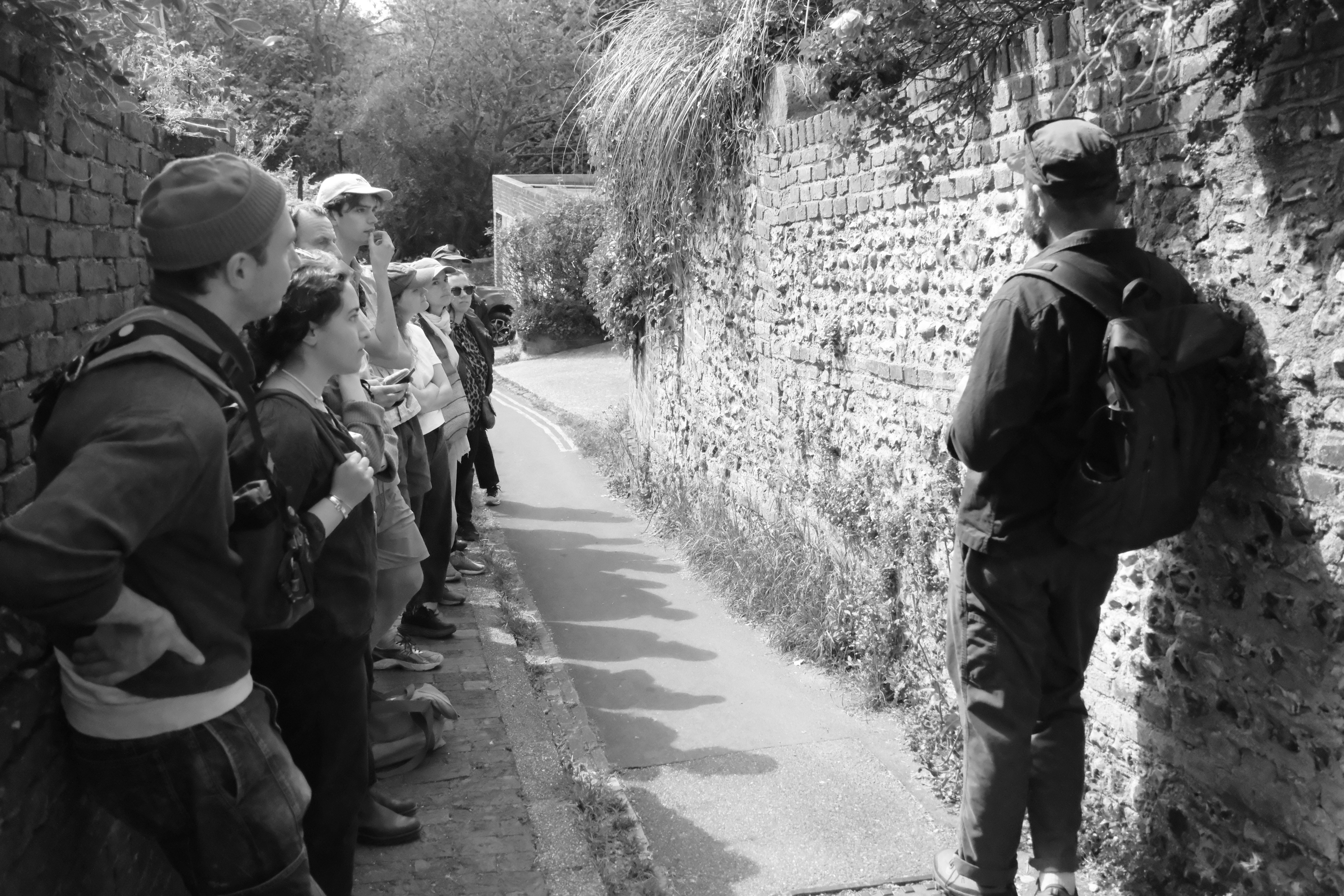
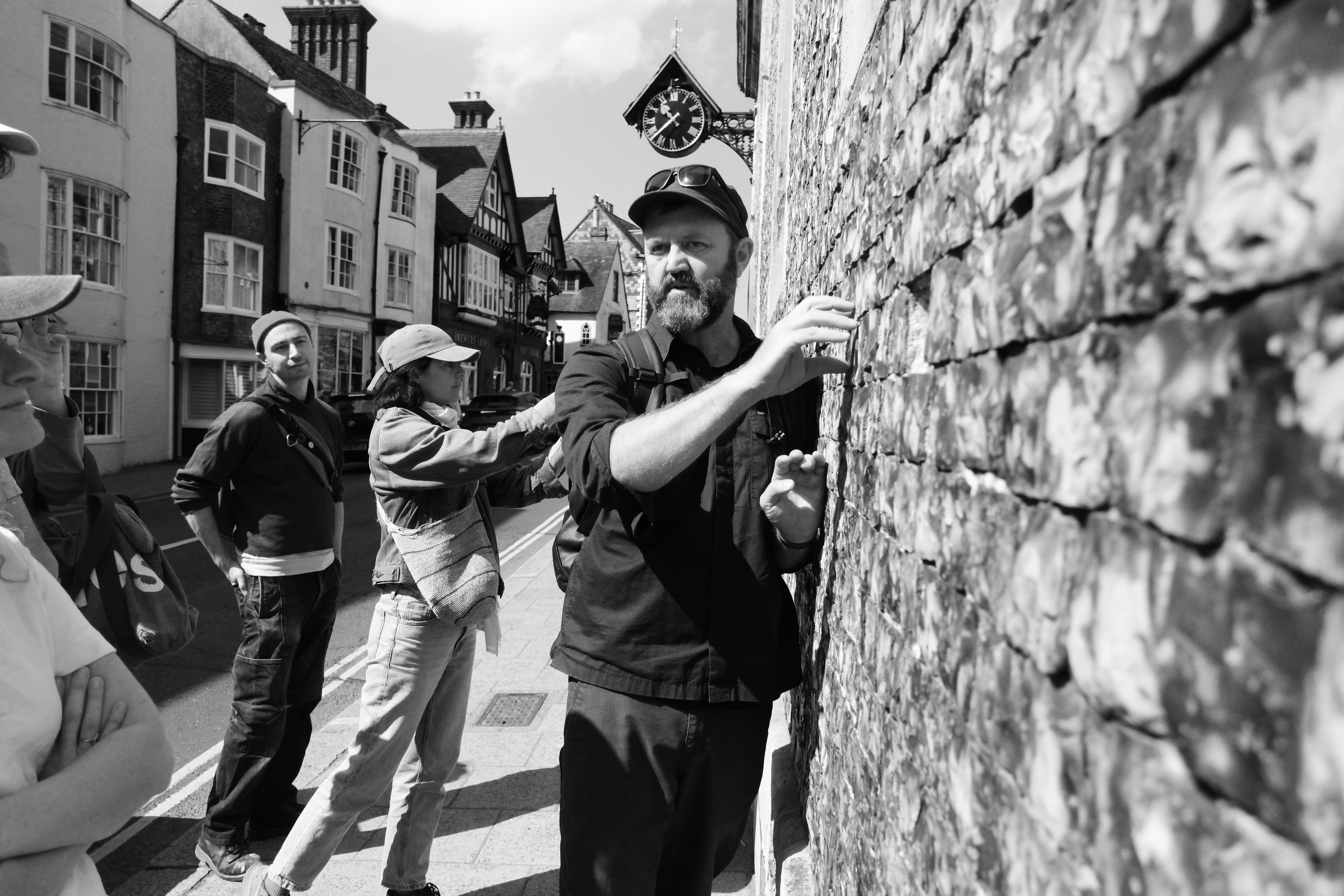
Lewes is a beautiful, historic county town, essentially built from rubble. Bungaroosh is the term for the building method that emerged in response to our very particular geographical context, like all vernacular practices. It describes the use of locally available, poor quality building materials - field flints, shingle and pebbles from the coast, over-fired bricks from industry and broken stone from ruins, occasionally even pieces of waste wood – combined with lime mortar, made from abundant chalk and beach sand, thrown into a wooden mould again and again, higher and higher, to quickly and cheaply form the layers, or ‘lifts’, of a wall. Like a sort of masonry hash brown, made from unpromising leftovers, when assembled with love and a good dollop of sauce, it becomes an unexpectedly beautiful thing. Our first stop on the tour is on a narrow steep street above the station, to look at a wall made of brick, flint, and handsome blocks of Caen stone from Normandy - scavenged from the dissolved Lewes Priory, after Thomas Cromwell ordered that it be dismantled in 1537. These found bits and bobs were reworked, ordered and neatly arranged in the face of new walls, in rows of masonry confection. This is the Sussex equivalent of Spolia, the ancient practice of reusing the remains from demolition for decoration and structure in the next generation of dwellings and public buildings. It’s a wonder that the facades, party walls and tall garden boundaries of Lewes, and those of the neighbouring city of Brighton and Hove, who share this unconventional built vernacular, still stand today. Proof, if any were needed, that our current culture of standardisation and building control is too exacting and that, with greater tolerance, a more creative, intelligent use of serviceable local materials is possible. One of our group tells us how they are making peace with the bungaroosh walls of their house. With a fifty-fifty chance of hitting crumbling lime or diamond hard flint with every stab of the drill bit, they have resigned themselves. “The building chooses where we’ll have our shelves”.
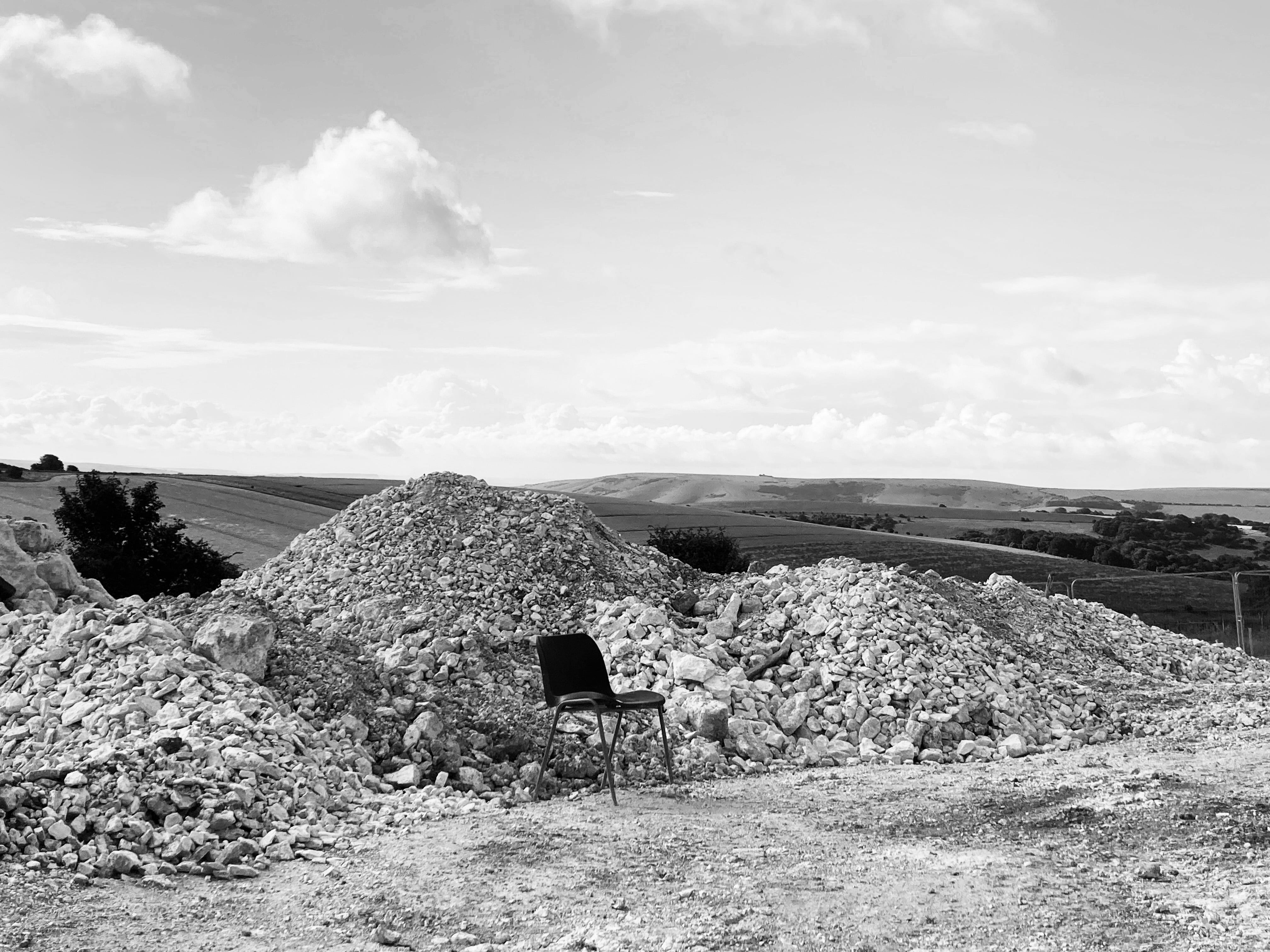
Other than the abundant lime mortar between flint courses, we see very little chalk in the walls of Lewes. Apparently not all chalk was created equal, in terms of its usefulness to builders and place makers. It can be creamy and crumbly like a mineral Lancashire cheese, or hard enough to cut and chisel into ashlar blocks (like a very stale parmesan?!). On the soft end of the masonry spectrum, its usefulness as a building stone is limited. Chalk in all its forms readily absorbs water and is therefore vulnerable to shattering with the action of repeated freeze and thaw, so is rarely suitable for outdoor use. Rough quarried chalk is naturally self-binding when under pressure and can be rammed to form slippery paths or solid load-bearing walls. Despite recent interest, there are still very few examples of the successful application of rammed chalk in buildings, due to the time and patience required to dry walls so that occupants can enjoy an algae free finish. Far beyond the Downs to the west, at Amesbury in Wiltshire, there is an experimental village of ordinary looking houses built for soldiers returning from the first world war from cheap rammed-chalk spoil.3 There is a deep seam of fine chalk rock surfacing on either side of Lewes, that once yielded a hard stone called Melbourn Rock. Ben has repaired internal walls made from the stuff at the Old Poor House at the foot of the castle banks. Now, chalk for building is only available from a single quarry, at Duncton in the West Sussex Downs, just hard enough to be used outside with ‘a good hat and shoe’.
Still, every time a road is built or a development rises out of the bedrock of the Downs hundreds of tonnes of chalk come with it. Last year we made huge quantities of lime-clay plaster, to our own recipe, when we were commissioned to develop site specific materials for Streat Hill Farmhouse on the crest of the Downs, just beyond Lewes at Plumpton. We collected waste chalk from the excavated site, and a pale grey Gault clay taken from another project at the bottom of the same hill. The two were slowly ground and blended in the roller-pan mixer until unctuous and creamy (and I’m naturally going to use another cheese metaphor here) like a thick ricotta, to be slathered and smoothed onto five hundred square metres of new walls - left raw and unpainted.
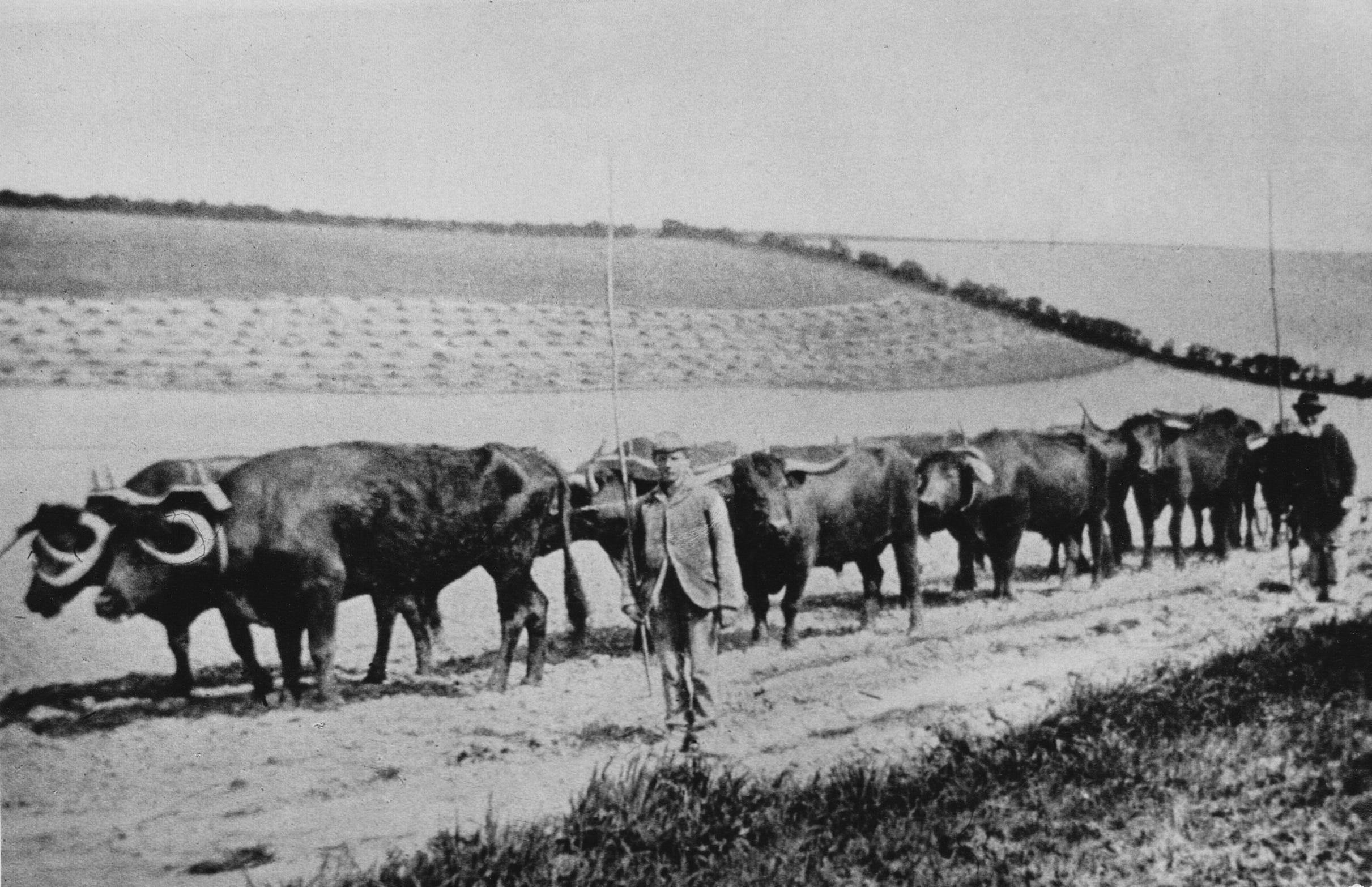
Back on our walking workshop, we stopped in a covered alleyway off the high street to see a patch of four-hundred-year-old plaster on lath, repeatedly mended. A crack in the repair revealed the tell-tale red hair of Sussex Oxen, a category of animal now disappeared from the country, put out to pasture, fattened and reclassified as mere beef cattle. An oxen is simply a castrated male steer, trained and conditioned from a young age for draught work, that is, pulling the plough or cart, usually in a team of six or eight.4 Long-horned Sussex Oxen where famously heavy, strong, and docile, with a thick, deep-red coat, (perfect for binding lime plaster). Calves were prepared for work in pairs and remained together for their whole working life. A wooden yoke was shaped to fit the specific contours of each couple. After the enclosures, when hedges divided open land across the country, the slower, inflexibly long teams of oxen struggled to make the tight turns around new, smaller fields. A heavy horse is twice as strong as an ox and their smaller teams were a more agile substitute. Perhaps this is why the wide-open downland was one of the last places in the country to see oxen in use. In 1900, travelling naturalist William Hudson observed “these great, slow, patient oxen cannot go on dragging the plough much longer; the wonder is that they have continued to the present time”.5 In Sussex it was traditional to call the nearside animal of each pair by a single syllable name and the far side by a double syllable. In 1923, Quick & Nimble, Lark & Linnet, Lamb & Leader were still working together on the Downs at Cuckmere, cloven iron shoes striking flint, making sparks in the dusk, as they returned from the fields.
“The flint was the one crop that never failed”6
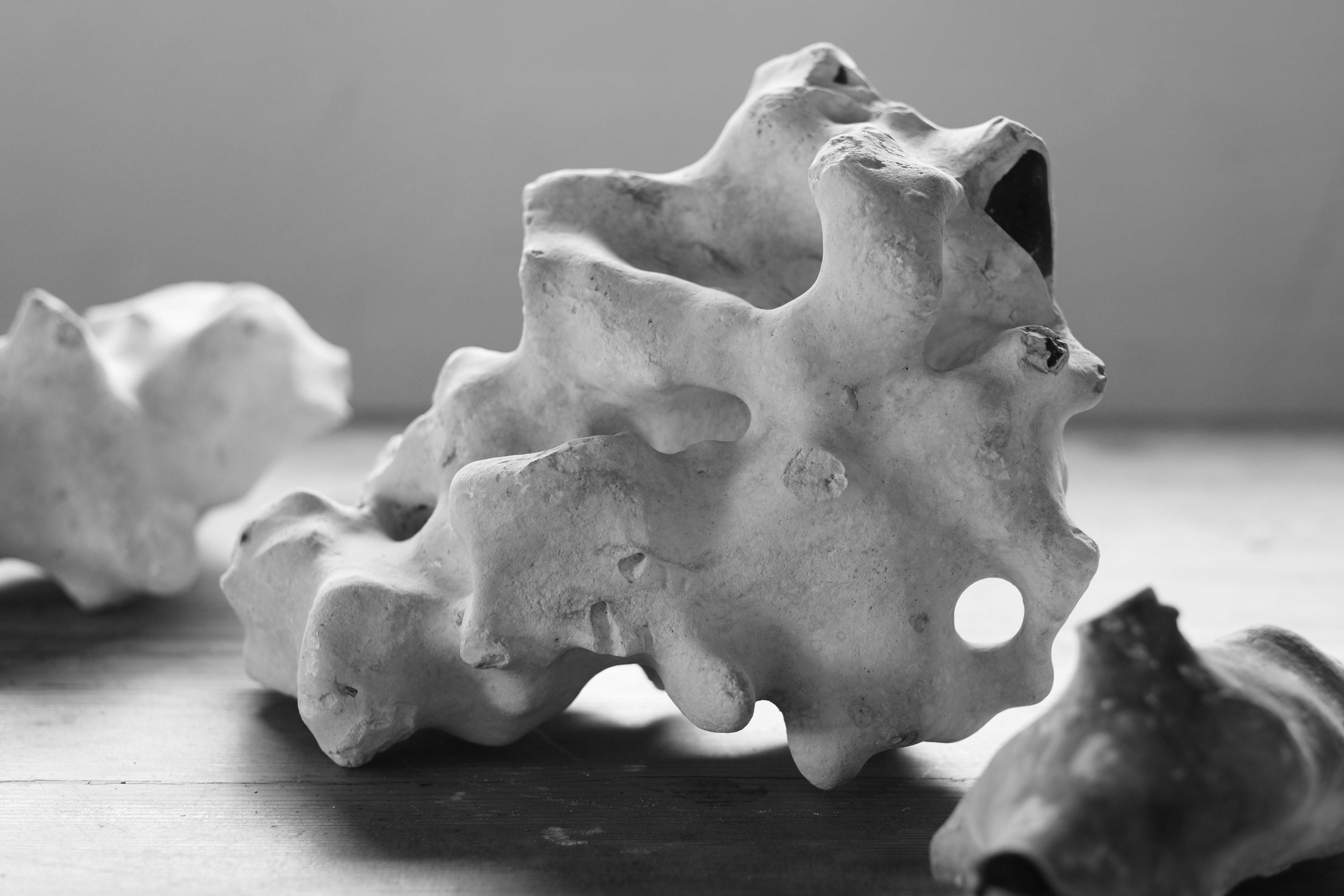
Flint picking was the Sisyphean task of farm boys, women and children, who would regularly remove the stones from behind the plough, for use in building and road works. Every year they would find the soil equally riddled with stones, leading to a superstition amongst labourers that flint was actively growing from the chalk. At its crudest flintwork can be composed of random split stones and pebbles, cast in a bungaroosh wall, laid as found, or coursed in neat rows. Up Keere Street pedestrians twist ankles on water-rolled cobblestones, known in Sussex as petrified kidneys. The Victorians were fond of the rough and rustic, laying great nodules at random, with thick ribbons of ‘snail creep’ mortar between. Flint knapping is the practice of quartering and squaring the stones, for convenience or decorative effect, by gradually removing flakes with sharp percussive blows from a club hammer or hammerstone. It is still practiced today, but as an endangered craft, due to an acute skills shortage. Outside St. Michaels in Lewes Church, the finely chipped flints reflect the midday sun, earning their nickname as ‘Sussex Diamonds’. Along the upper High Street we stop to examine the Georgian fronted Lewes Old Grammar School – a premium example of perfectly squared, flush-faced flint, expertly coursed with the narrowest of joints. Next door, tiny flint flakes, ‘Galettes’, were pushed into the mortar to close any gaps. Teenage children lean out of the classroom window to laugh at us, so we move on, making a beeline for the rolling Downs.
Once wooded with hangers of Beech, Ash and Yew, clearance of the South Downs began in the Neolithic period. Early settlers created patches of pasture with controlled burning on the light chalky soil, favoured for winter grazing away from the clay of the Weald. As animals enriched the poor, thin soils, a companionable relationship between sheep and wheat arose and with it a unique man made agricultural landscape. The graceful, naked profile and rare chalk grassland that we know and love today was created by the action of hundreds of thousands of nibbling Southdown ewes. In summer the grassy slopes at Landport Bottom Nature Reserve, where the town meets the open countryside, is dotted with tiny constellations of Fairy Flax, Birdsfoot Trefoil, Wild Thyme, Eyebright, Ladies Bedstraw, Kidney Vetch, Pyramidal Orchids and Red Clover. Skylarks, Linnets and other ground nesting birds make their homes in the sward and Adonis Blue, Painted Lady and Gate Keeper butterflies alight on the flowers to feed and breed. On steeper slopes of the Downs, inaccessible to the tractor and hidden from visitors in remote combes, there can be as many as forty species of flower per square metre. Ancient chalk grassland is so biodiverse that it is sometimes compared to a rainforest.7 A manmade landscape needs to be maintained, without grazing the unique flora is slowly encroached upon and smothered by rank grasses and the march of suckering shrubs from the hedgerows. With the decline of sheep farming and the advent of industrial agriculture, it was only the plentiful rabbits that kept on top of the gardening, and now they too are gone with disease. Now only 4% of the South Downs National Park contains the internationally rare habitat.
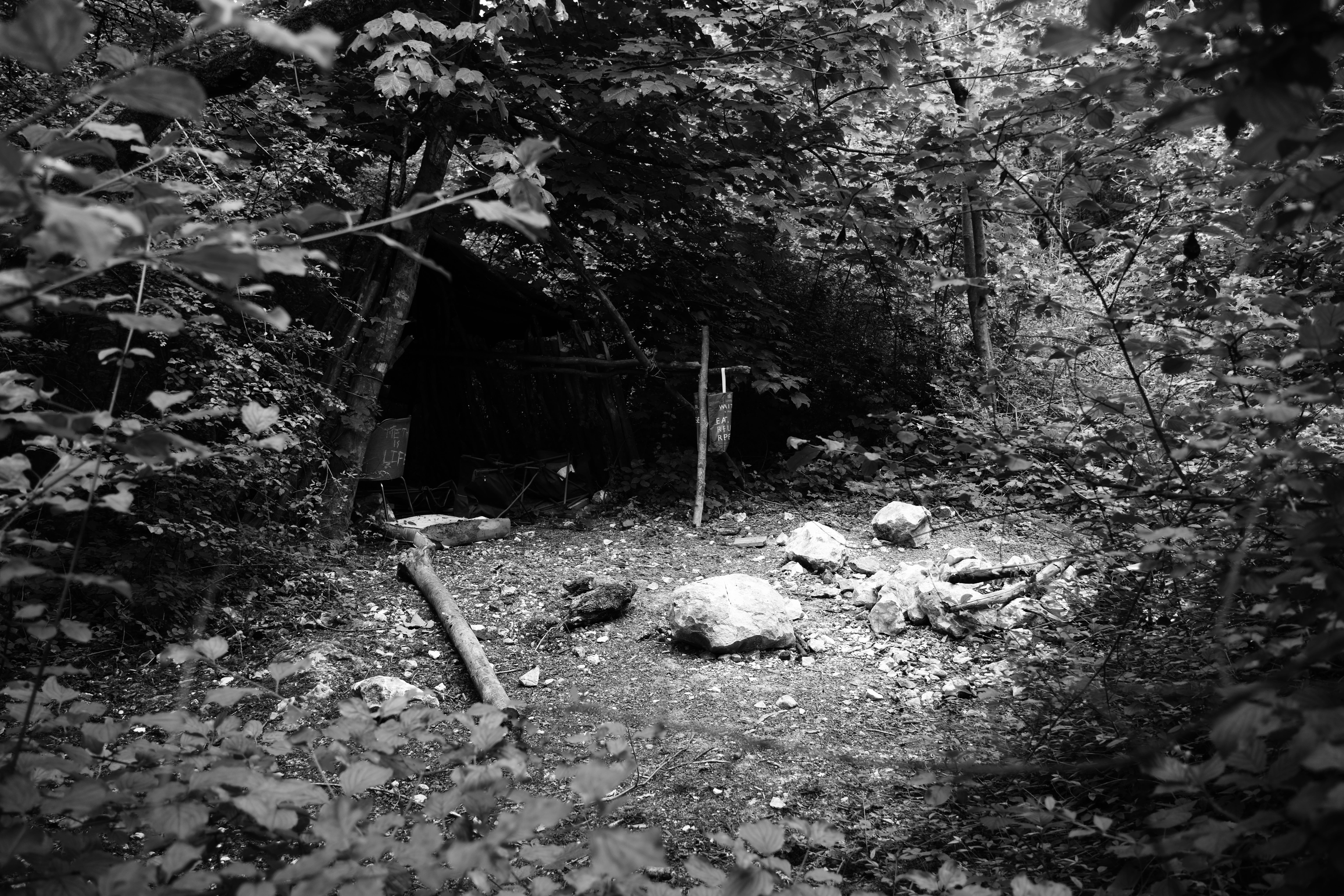
We make our way over the meadows and into the thicket at the edge, pushing aside twining shoots of Traveller’s Joy and branches of the Wayfaring tree until we come to the edge of a vertical drop above Offham Chalk Pit. Two hundred feet below us is the Curry Cottage, occupying the former office buildings of Messrs George Shiffner & William Jessop who established a chalk quarrying and lime burning enterprise here in 1783. At the foot of the white cliffs a brick arch once led to the tunnels of a state-of-the-art funicular railway, built to transport agricultural lime from the kilns, down the 2 in 1 hillside to barges waiting on the river below. We wind our way along a white goat path, down through a dying copse of Ash trees, to another pit, known locally as the Treacle Mines. This place has distinctly Stig-of-the-Dump vibes, with tarpaulin shelters, rope swings, bike jumps and clear evidence of high-stakes cliff top teenage parties. On a grassy platform, surrounded by scrub and chalky hummocks, we eat slabs of homemade Rocky Road and survey the view over the water meadows towards the Low Weald. These are the fields whose heavy soils so benefited from the application of lime, to release nutrients locked in their fine pores. Below us the flint church at Hamsey sits on a low mound, effectively made an island in 1790 when the Upper Ouse Navigation Company dug a short-cut canal across a serpentine bend in the muddy river8. Cut off from any future electrical supply, the church is still lit by candles.
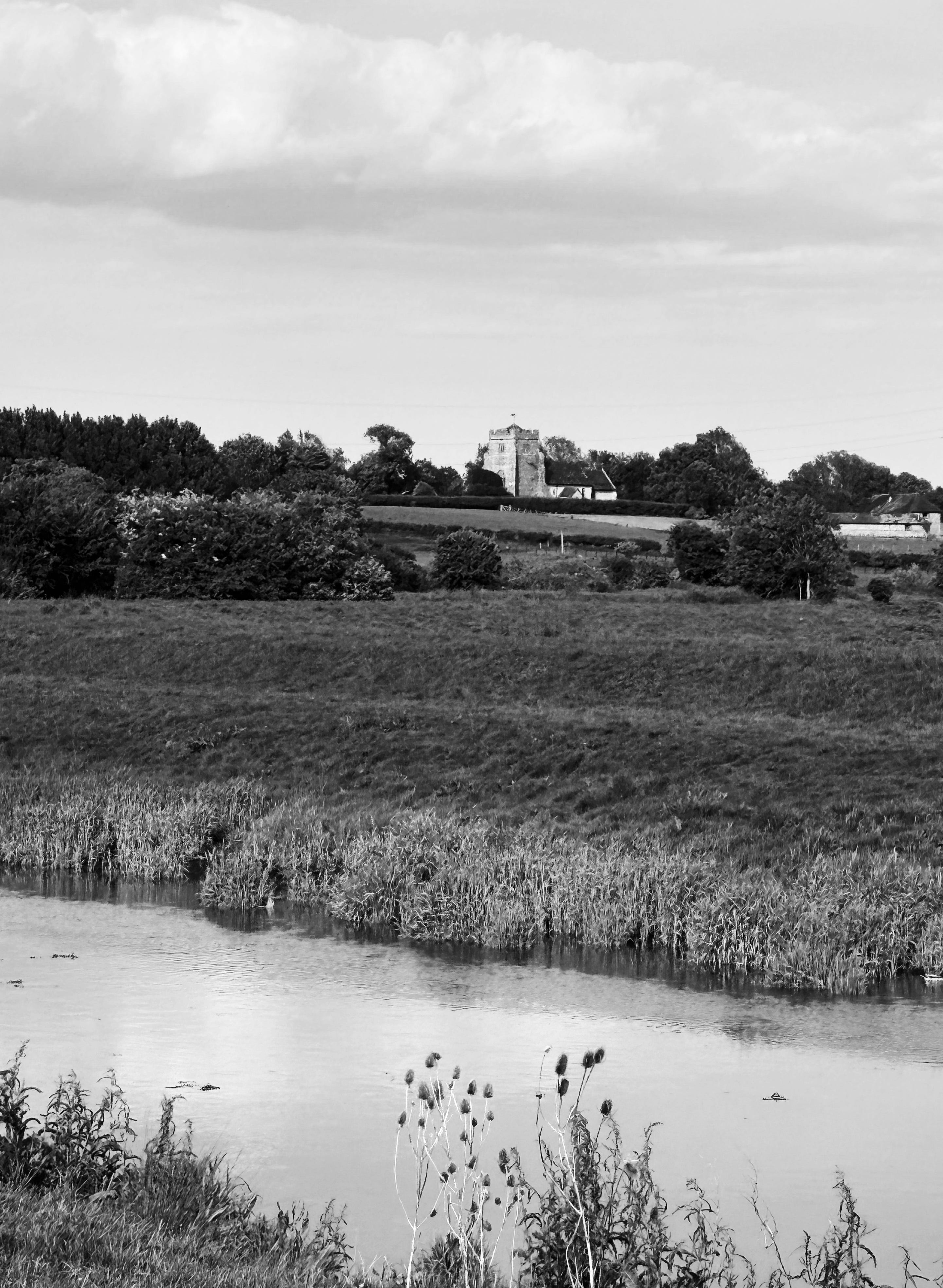
We head down the slopes and stroll back along the winding riverbank towards Lewes. On the edge of town reeds, silt and murky water give way to cracked tarmac and light industry. We walk through the remnants of the Phoenix Industrial Estate, past learner drivers making fourteen point turns in the quiet of empty car parks. The place was once home, in various eras, to a Victorian iron works, timber merchants, a DIY Skatehouse, artists’ studios, garages and Furniture Now!. We’re welcomed into the offices of progressive developers Human Nature, who for the past five years or so, have been doggedly pursuing a new dream for the site - of a riverside neighbourhood of 685 homes built to ambitious ecological standards. We were commissioned to do a pre-deconstruction audit of the existing buildings and a material strategy for the reuse of their contents a few years ago and continue to advise on matters of materiality. The aim for construction is to make extensive use of timber and plant-based insulation, with much of it sourced as close to the site as possible. The designs will require copious quantities of lime for renders and hempcrete and we have worked with the team on incorporating this into designs, in combination with site waste. Andy Tugby, Head of Sustainable Construction, and the person in charge of ensuring deliverability of designs, stands over a laser cut model of the development that has seen countless rounds of public consultation. It’s obvious from what he tells us, and from our own experience as consultants, that there is no idea too far-out for them to seriously consider, in their pursuit of the most ecologically sympathetic and liveable outcomes. Many idealistic proposals, like using sailing barges for delivery, or reusing ancient steel frames for housing, have been assessed and ultimately deemed unviable, but no one could accuse these developers of running a cynical closed-door operation. With planning permission under their belts, it seems like something good might actually happen.
Whether you equate the housing crisis with a shortage of buildings, or with a gross disparity in wealth and ownership of assets, the fact remains that we will see hundreds more homes being built in and around Lewes (and towns like it) over the coming years. The materials for these houses will come from somewhere, and conventional wisdom dictates the source will be far away from our backyard, with predictably negative consequences for distant people and ecosystems. Even with the commitment, good will and investment coming from enlightened developers, UK forests and growers may not yet have capacity to deliver bio-based products at the volume required. Could any of our abundant, but idiosyncratic local minerals be part of a shorter, accountable and less polluting supply chain? Are chalk and flint materials of the future? Certainly, they have a crucial role to play in the repair and maintenance of pre-war housing stock in the town, but could they also be used to repair, refurbish and expand newer sustainable buildings? Could they even be used in the construction of the more than 700 homes that are planned to be built annually in the district?
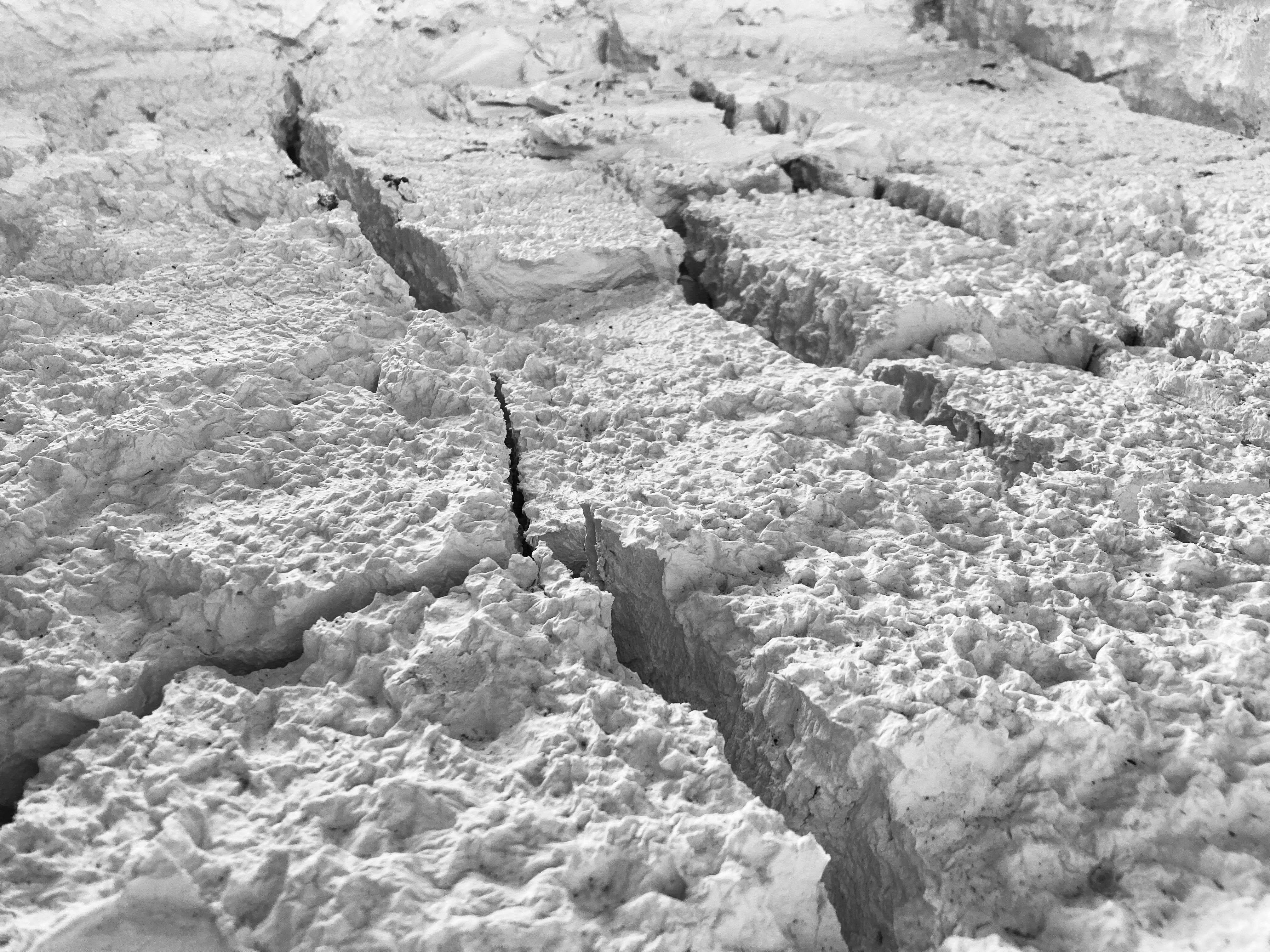
The possibilities for rammed-chalk and even bungaroosh are still under-researched and perceived as too risky for immediate, widespread use. The most viable solution is more conventional. Chalk can be transformed through heating into ‘quicklime’ or ‘air’ lime and used to render buildings that need to breath, like those made from regenerative plant-based materials. This is a different product to hydraulic lime, routinely used as a ‘green’ cement substitute. Quicklime is more breathable, more flexible, requires less energy to process and crucially can be produced from the pure limestones available in this country, including chalk. Tradespeople lean so heavily on imported, higher-carbon hydraulic lime because of familiarity and ease of use – you can use all your standard tools and follow the instructions on the pack to mix a predictable cold slop, and use it just like cement. To work with traditional quick lime is something else entirely. Quicklime is the wild child of building ingredients and when it comes into contact with water, which it must, it goes utterly bonkers. One wrong move with this tempestuous stuff could lead to losing the whole mix, melting equipment, future failure of the material, or, when PPE is forgotten, life changing injury. The builder must tame and coax it into submission in a seriously intense ten-minute window of hot-mixing, through constant attention, patient observation and sympathetic adjustment. It is only through several recent waves of a ‘lime revival’ that this intuitive skill has been saved from complete extinction, because understandably, builders and architects were happy to use something a little less full on and, importantly to fans of efficiency, foolproof.
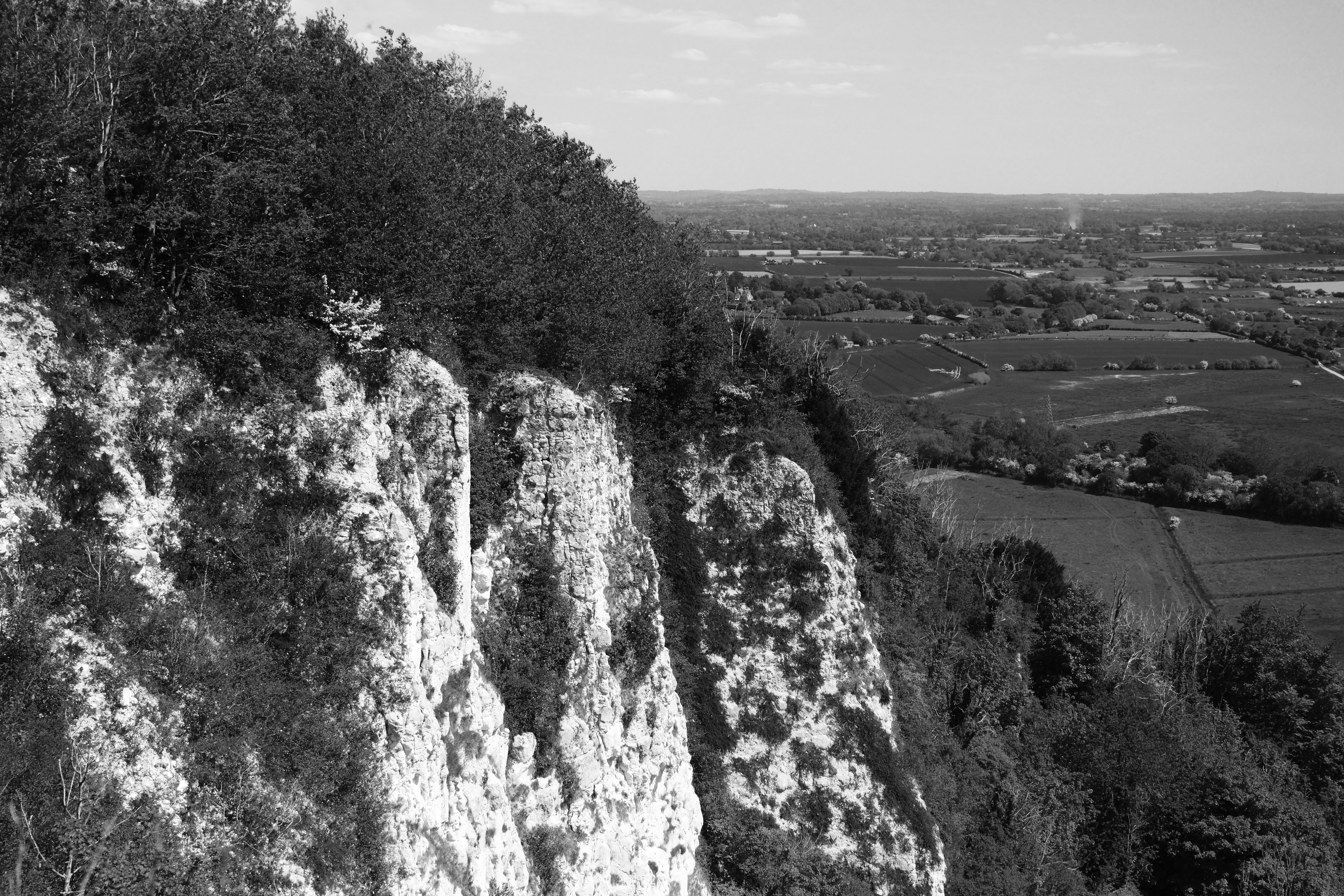
Along the river Ouse that winds through Lewes to the sea at Newhaven, chalk pits were once more numerous than anywhere else in Europe9, providing the raw materials for agricultural lime, building lime, spoil for roads and foundations, grey chalk for cement and white chalk for the swirling Artex patterns of suburban living room ceilings. The quarries are all ‘worked out’ or closed now. Those that haven’t been filled in are occupied by light industrial warehouses selling craft ales and soft play, or criss-crossed with motorbike tracks leading to hidden shelters and fire pits, or the high-rise nests of Peregrine Falcons. Industry and all the accompanying logistics are unlikely to be welcomed back to the historic town or the protected landscapes of the South Downs National Park. The region, it’s historic character and rare ecosystems must be protected from rapacious development and pollution, but it must also reconcile itself with a past and future defined by human activity. We won’t be sailing barges up the tidal, silted Ouse to deliver materials. Oxen will not replace the tractor. Sheep will never again graze in the numbers required to keep the encroaching scrub from smothering rare flora. However, some skills, knowledge and ways of being may be worth reviving and adapting to 21st century problems. As communities of a living, working landscape we have a far greater understanding of complex local and global interactions than our forebears and can choose how to make the most of our current assets for good. It is possible to nurture ecosystems and celebrate regional particularity, whilst still ensuring prosperity and shelter for inhabitants.
Bone, D. (2012) How Flint is Formed. The State of the South Downs National Park, SDNPA & West Sussex Geology
‘Sussex’ Poem by Rudyard Kipling, 1902
Swenarton, M. (2003) Rammed earth revival: technological innovation and government policy in Britain, 1905-1925, Construction History Vol. 19.
Sue Craig – Sussex Oxen – A Lost History, 2021, Video
Nature in Downland, W.H.Hudson, 1900, London & Toronto: J.M.Dent & Sons Ltd
‘Wind and Mist’ Poem by Edward Thomas, written on April 1st 1915
The State of South Downs National Park 2012, SDNP http://snpr.southdowns.gov.uk/files/default.html
Harmer, J. (1991) Our Parish: Tales of Offham, Hamsey and Cooksbridge
Brandon,P. (1998) The South Downs. The History Press